Past Selection has Delivered Clear Gains in Efficiency at the Same Time as Reducing Emissions
Methane produced per kg has decreased by 4 - 10% across our breeds through gains in ewe efficiency alone.
blog by Emma Dods, Breed for CH4nge
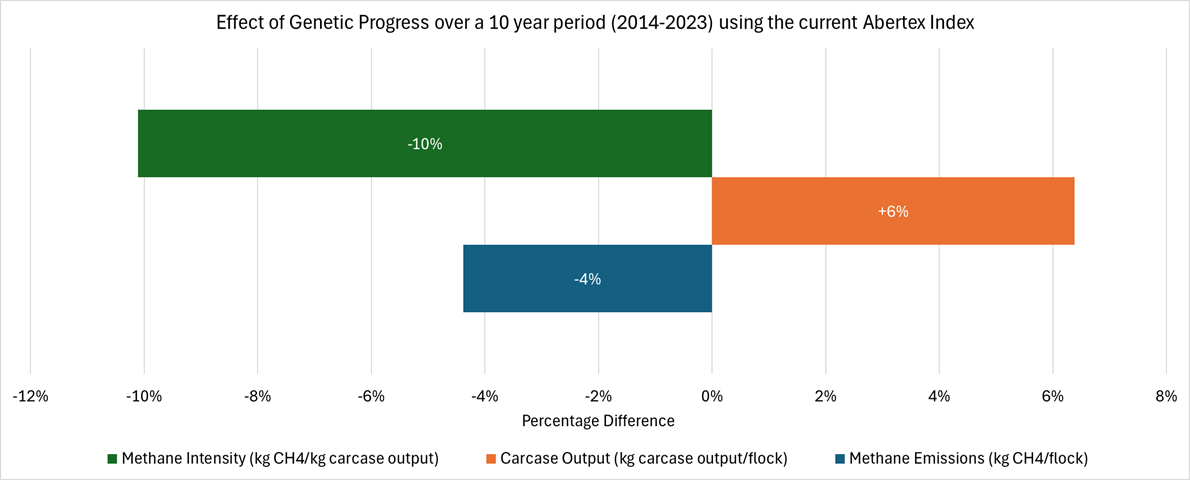
Over the past decade, maternal selection indexes have delivered clear gains in both productivity and environmental efficiency. Although these indexes were designed to improve profit and not to directly improve methane intensity (kg methane/kg output), analysis of genetic progress demonstrates a consistent outcome across all breeds in the Breed for CH4nge project, with methane intensity decreasing between 4% and 10% across breeds over a 10-year period. At the same time, output has increased significantly, with some breeds achieving gains of up to 17% in carcase output/ewe. These improvements reflect sustained selection for traits linked to efficiency, such as prolificacy, lamb survival, growth rates, ewe weight and overall performance.
In some of the breeds, increased output has been accompanied by a slight rise in total methane emissions. However, this is offset by a larger increase in carcase output, resulting in an overall reduction in methane intensity due to greater efficiency of production. Notably in many of the breeds, methane emissions have actually decreased alongside increased production; ewes producing more carcase output whilst eating less and emitting less methane.
These findings highlight the important role that maternal selection indexes can play in supporting sustainability goals, by prioritising efficiency and so enabling producers to reduce the carbon footprint of lamb production without compromising productivity. Whilst current indexes are already driving favourable outcomes, the opportunity to build on this progress by incorporating methane-specific traits will accelerate reduction even further, helping farmers achieve environmental goals whilst increasing production and profitability potential of the flock by genetic improvement using maternal selection indexes. We are developing a new index specifically designed to reduce methane intensity from ewe flocks further by prioritising the traits that have the greatest influence on carbon footprint.