
Breeding more efficient, lower-methane sheep: Insights from the Harper Adams Lleyn Flock
blog by Sarah Morgan, Harper Adams University
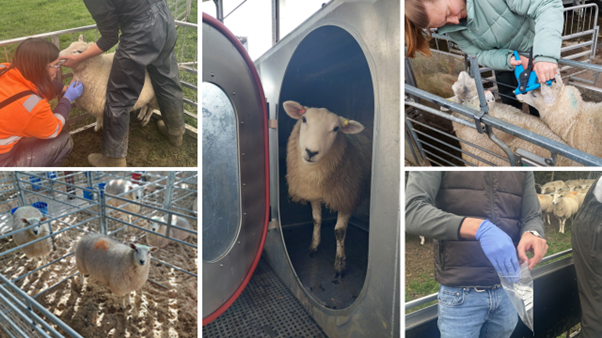
Sheep from the Harper Adams University performance-recorded Lleyn flock have contributed phenotypic and genetic data to inform the development of genetic selection tools to allow breeding of more efficient, low-carbon maternal sheep as part of the Breed for CH4nge project. Over the three-year study, almost 600 progeny from 14 sires were phenotyped for methane emissions and parasite resistance traits, with a subset of 186 animals additionally evaluated for feed efficiency. The key findings from the Harper Adams Lleyn dataset are summarised below.
Between-sire variation
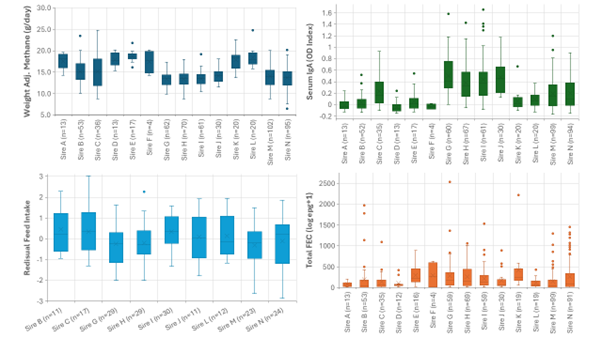
Significant differences between sires were observed for methane emissions and parasite resistance traits. However, substantial within-sire variation was also evident, indicating that while genetic effects are present, environmental influences and individual animal variation play a major role in determining phenotypic expression.
Feed efficiency evaluation
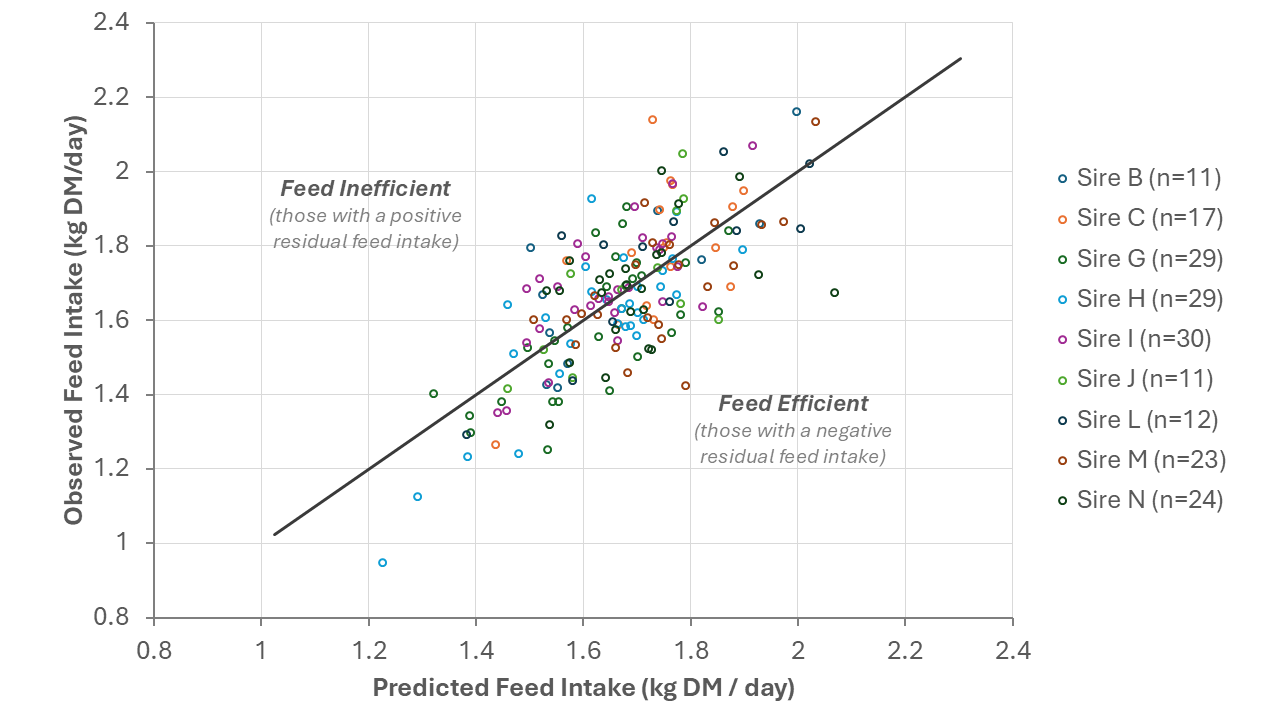
Residual feed intake (RFI) was used to assess feed efficiency, calculated as the difference between actual and predicted feed intake based on body size and performance. Animals consuming more than predicted are classified as feed inefficient (positive RFI), while those consuming less are feed efficient (negative RFI). No significant differences in RFI were observed between sire groups, suggesting limited detectable sire influence on feed efficiency within this dataset.
Trait relationships with methane
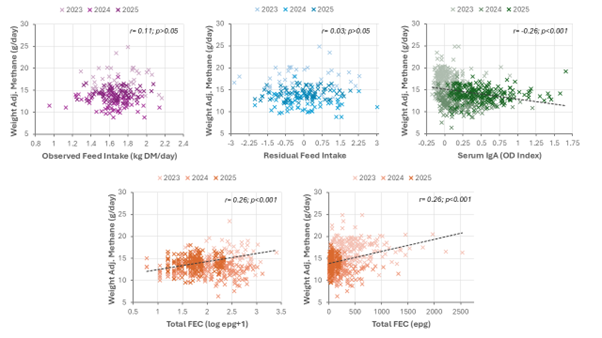
No clear relationships were identified between methane emissions and actual feed intake or RFI. In contrast, moderate associations were observed between methane and parasite resistance indicators (FEC and IgA), suggesting potential indirect links between methane production and host immune response, with animals showing higher serum IgA (and lower FEC) tending to emit less enteric methane.
Key takeaways
Overall, while genetic selection shows potential, trait relationships are complex, highlighting the importance of adopting balanced, multi-trait breeding approaches.