
Breed for CH4nge Index
A new selection index ranking breeding sheep on their potential to reduce the carbon footprint of a breeding ewe flock
blog by Emma Dods, Breed for CH4nge
Annual reduction in methane intensity (CH4/kg carcase output) of 3% is achievable, with 25-38% of gains driven by direct methane selection and 62-75% of gains driven by optimised improvement in production efficiency traits.
The launch of the new ‘Breed for CH4nge’ selection index marks a significant step forward in helping the UK sheep sector reduce the carbon footprint of flocks, whilst enhancing sustainable productive and profitable systems.
Existing maternal indexes have already delivered strong progress, reducing methane intensity between 4% and 10% across breeds involved in the project over the past decade. The new index builds on this success and is expected to accelerate improvement further, delivering cumulative reductions in carbon footprint of around 3% per year through targeted selective breeding.
A defining feature of the Breed for CH4nge index is its balanced design that includes both a direct methane measurement trait and traits that contribute to an efficient ewe. Between 25% and 38% of the annual reduction in methane intensity is driven by a direct methane measurement trait, achieved using Portable Accumulation Chambers (PAC). The remaining 62-75% of the annual improvement is achieved through improvements in production efficiency traits, ensuring methane emissions are reduced per kilogram of carcase output rather than through reduced performance.
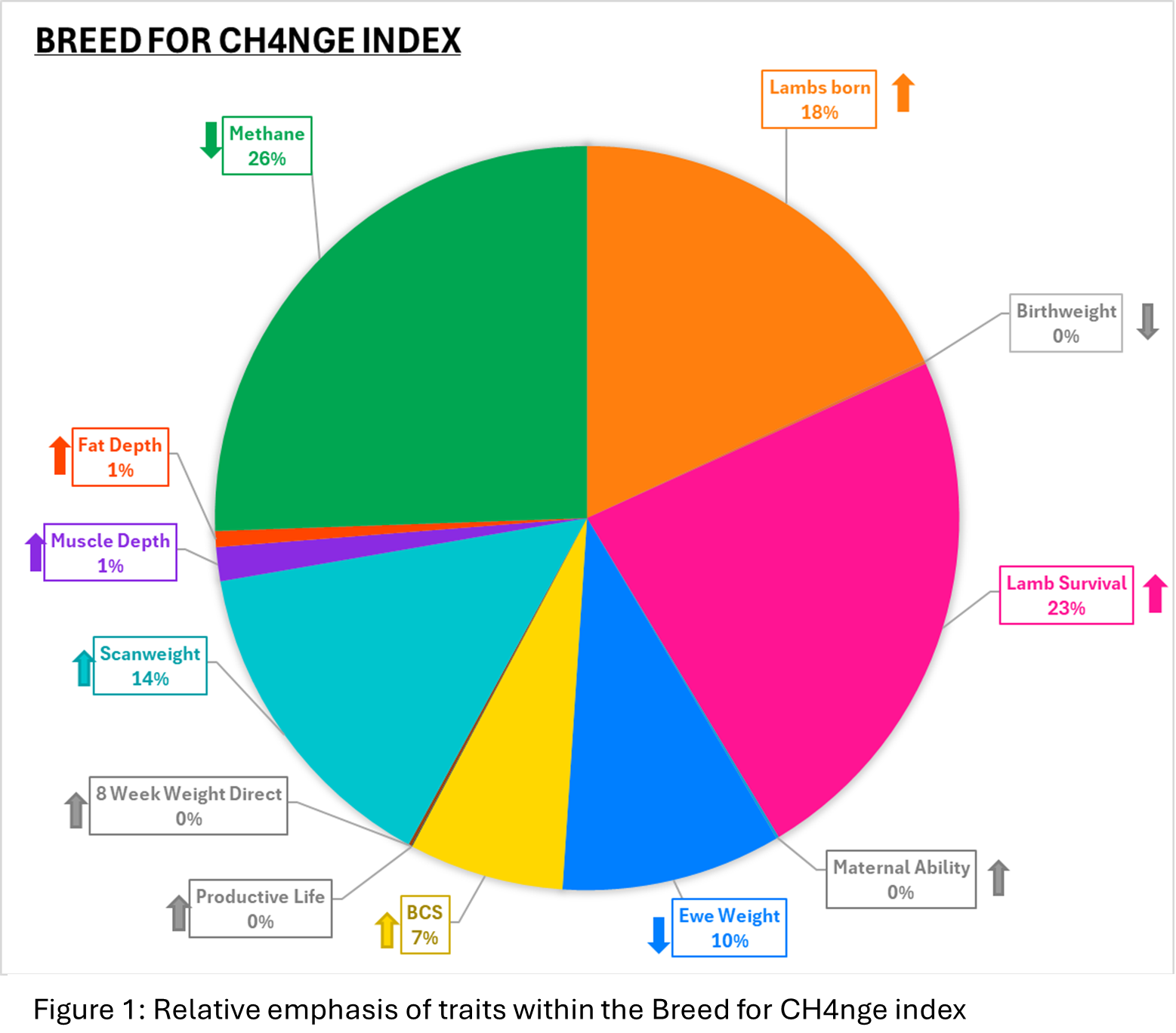
Relative emphasis of traits within the new Breed for CH4nge index (Figure 1) shows that the direct methane trait makes up 26% of the index with key production traits carrying significant emphasis, including lamb survival, number of lambs born and scan weight (14-23% each). Greater lamb survival ensures more lambs either enter the breeding flock or are finished as prime lambs contributing to carcase output, avoiding wasted energy and feed demands of both the ewe and lamb. Similarly, a good lambing percentage combined with good lamb survival optimises production and output with emphasis on scan weight resulting in prime lambs reaching target slaughter weight sooner, reducing days to slaughter and therefore the lamb’s energy requirements and methane emissions. Additionally, a higher scan weight results in a larger proportion of ewe lamb replacements achieving target weights for breeding, offering the potential to increase flock output.
Ewe efficiency is also carefully addressed by the index. Moderate emphasis (7-10%) on body condition score (BCS) and ewe weight respectively, helps prevent oversized, inefficient animals whilst promoting ewes that can maintain condition with lower energy demand to achieve optimum pre-tupping BCS post weaning. This reduces feed costs and supports a more sustainable and resilient production system.
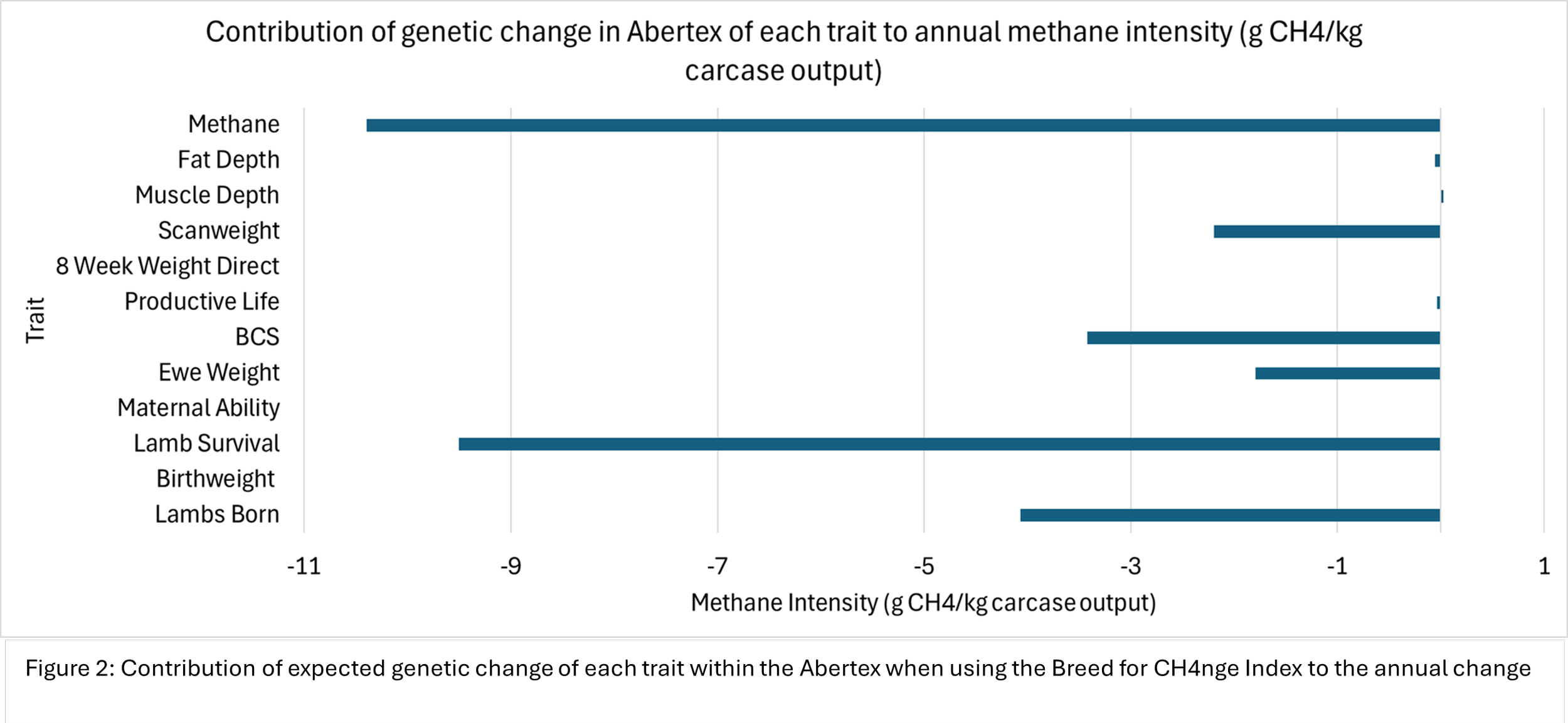
When looking at the expected genetic change within each trait by selecting animals based on this new index, and how they contribute to the annual change in methane intensity, whilst there are subtle differences between breeds, expected genetic change in direct methane, lamb survival, number of lambs born, lamb survival, scan weight, BCS and ewe weight are the most influential traits contributing to the animal’s ability to reduce methane intensity of the flock (Figure 2).
Presented through a simple star-based system (1* = bottom 20% to reduce methane intensity, 5* = best 20% to reduce methane intensity), the Breed for CH4nge index provides farmers and breeders with a practical and accessible tool to guide breeding decisions. Importantly, the new index aligns well with existing maternal indexes. Analysis shows that within the top 25% of animals on each current breed maternal index, between 53% and 73% rank as 4 or 5 stars on the Breed for CH4nge index for carbon footprint reduction. This means breeders can confidently select animals that excel both economically and environmentally, but with optimal trait weightings within the Breed for CH4nge index highlighting animals with the most potential to reduce the carbon footprint of a flock.
It is important that the Breed for CH4nge index is used as a tool alongside current maternal economic indexes. By selecting high-ranking animals on both indexes, breeders can reduce methane intensity while maintaining flock performance and profitability.
The Breed for CH4nge index will be introduced this sale season to identify Innovis maternal sires expected to reduce the carbon footprint by improving production efficiency and methane emissions and will soon be available across Signet-recorded maternal breeds. Its introduction offers a clear pathway for the sheep industry to contribute to net-zero targets, strengthen supply chain sustainability for producers and deliver tangible environmental benefits for the agricultural sector – whilst enhancing the efficiency and profitability of commercial lamb production.